
The Return
How I found my calling at thirteen, lost it at thirty, and came back for it at fifty-four.

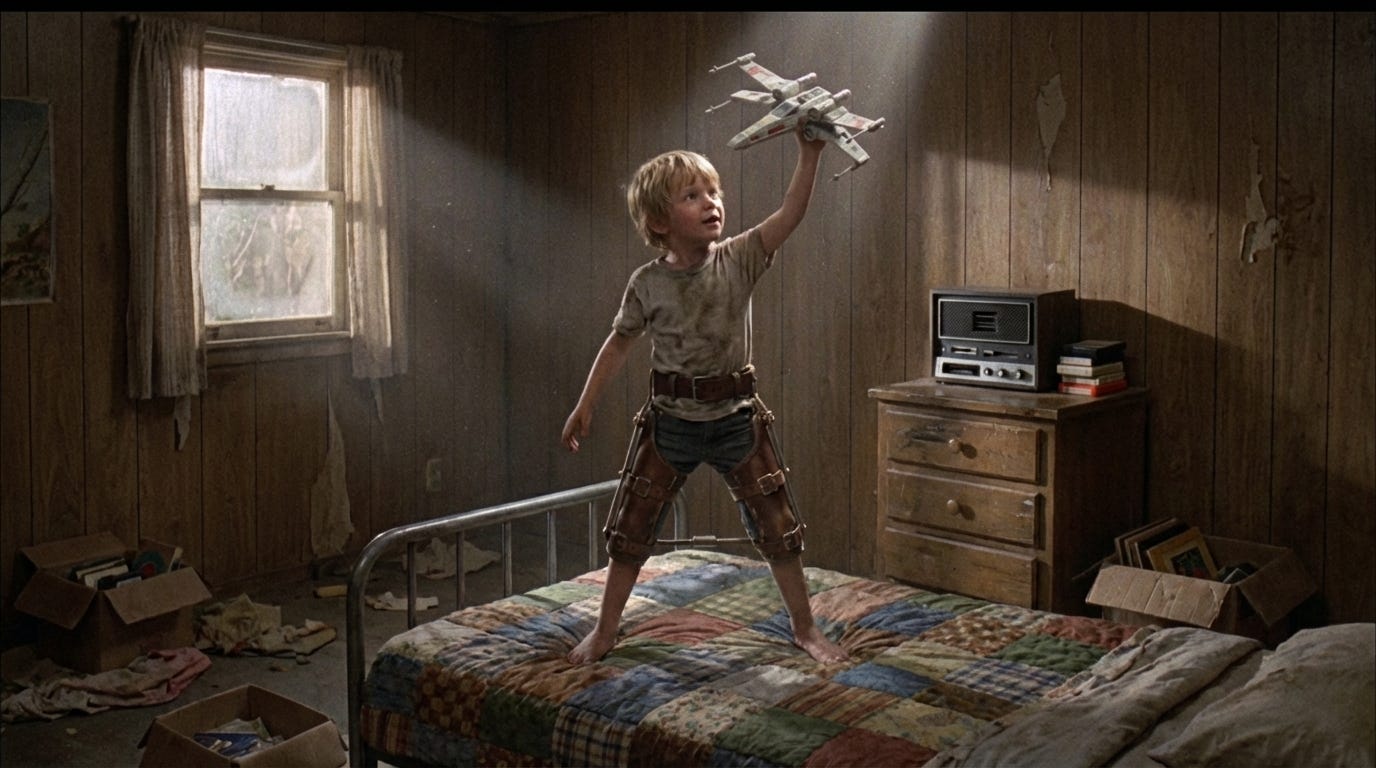
I was seven years old the first time I made a movie.
No camera. No film. Just a bedroom floor, my Star Wars figures, and John Williams playing on an 8-track tape.
I had braces on my legs — a 10-inch bar bolted between my knees, kind of like Forrest Gump, except this was real and there was no running involved. While other boys were learning to throw a football and ride bikes, I was learning to be alone. To go inward. To build whole worlds in a six-by-eight room in our trailer home.
And I did.
I remember the way the music swelled and I’d move the figures through the scene — Luke, Vader, an X-Wing Fighter — improvising stories, raising the stakes, playing every character. The John Williams score wasn’t background music. It was the engine of the thing. It told me when to feel something, and I felt everything.
At night, with the lights still out, the movies kept playing. On the back of my eyelids. Whole scenes. Complete with score.
After three years, the braces came off. But I was already gone. Already a different kind of boy than the ones out on the field. I didn’t know what to call it then. I just knew that the thing I loved most was the moment a world that didn't exist — suddenly did. Nothing in real life could do what imagination could: take a boy and carry him clean out of that room, across any distance, to any place he wanted to go.
Then, one afternoon at the bookstore in the mall, I found it.
Cinefex magazine. I was thirteen.
I sat down on the floor right there — didn’t even make it to a chair — and flipped through it slowly. Miniatures. Optical compositing. Practical effects. The real, physical craft of making the impossible appear on screen.
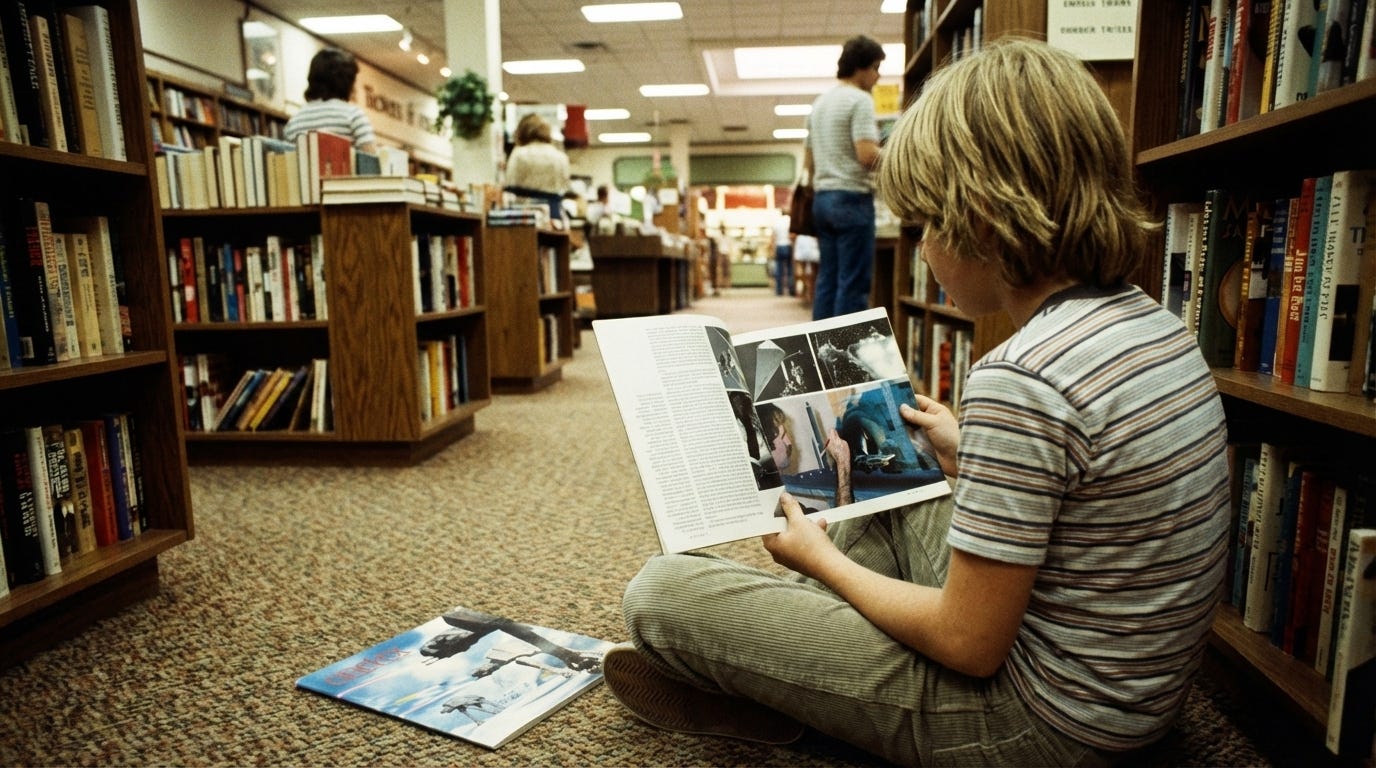
I didn’t know adults were allowed to do this for a living. I genuinely did not know it was a thing you could be.
By the time I got up off that floor, I knew. The way you know something when it lands in your chest and never moves again. I was going to make movies. That was it. There was nothing else.
When I got out of high school, I was broke. No money for college, no money for film school. So I moved from Fort Worth to Dallas, found a directory of Texas Film & Tape Professionals, and started at the top.
I called every name in it. Every single one. I offered to work for free. Just let me come. Let me be on set. I’ll carry anything. I’ll do anything.
Around the middle of the directory, I reached a director. He said there was a Dr. Pepper shoot that weekend. I could come if I wanted.
I would have driven through a wall.
I got on that set, and I worked. I saw the 35mm camera — just like the Panavision Panaflex I used to doodle on the covers of my school books — and it was real. C-stands, lights, and a dolly on a track. All of it, real. And I was on set, behind the camera. I was part of it.
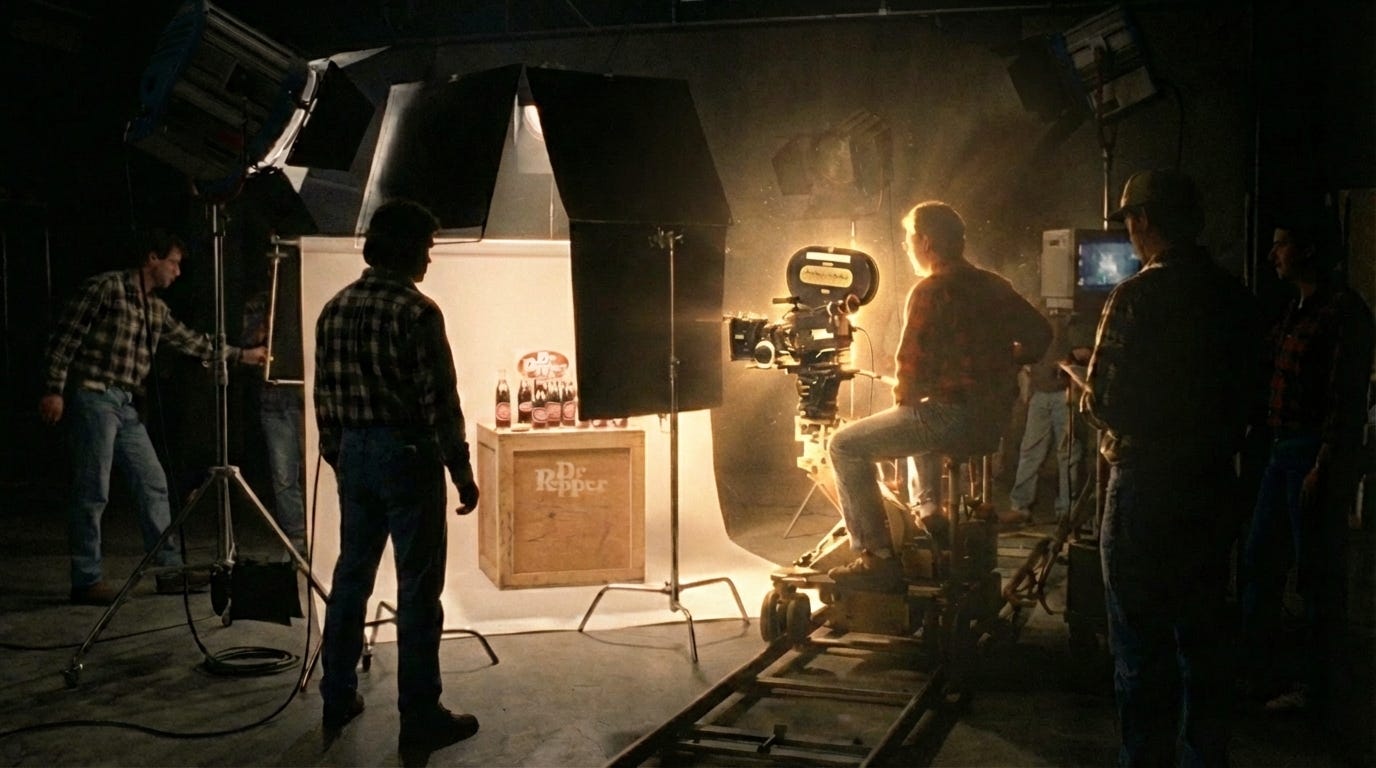
The production coordinator kept calling me back. A few shoots later, she told me she’d put me in the budget.
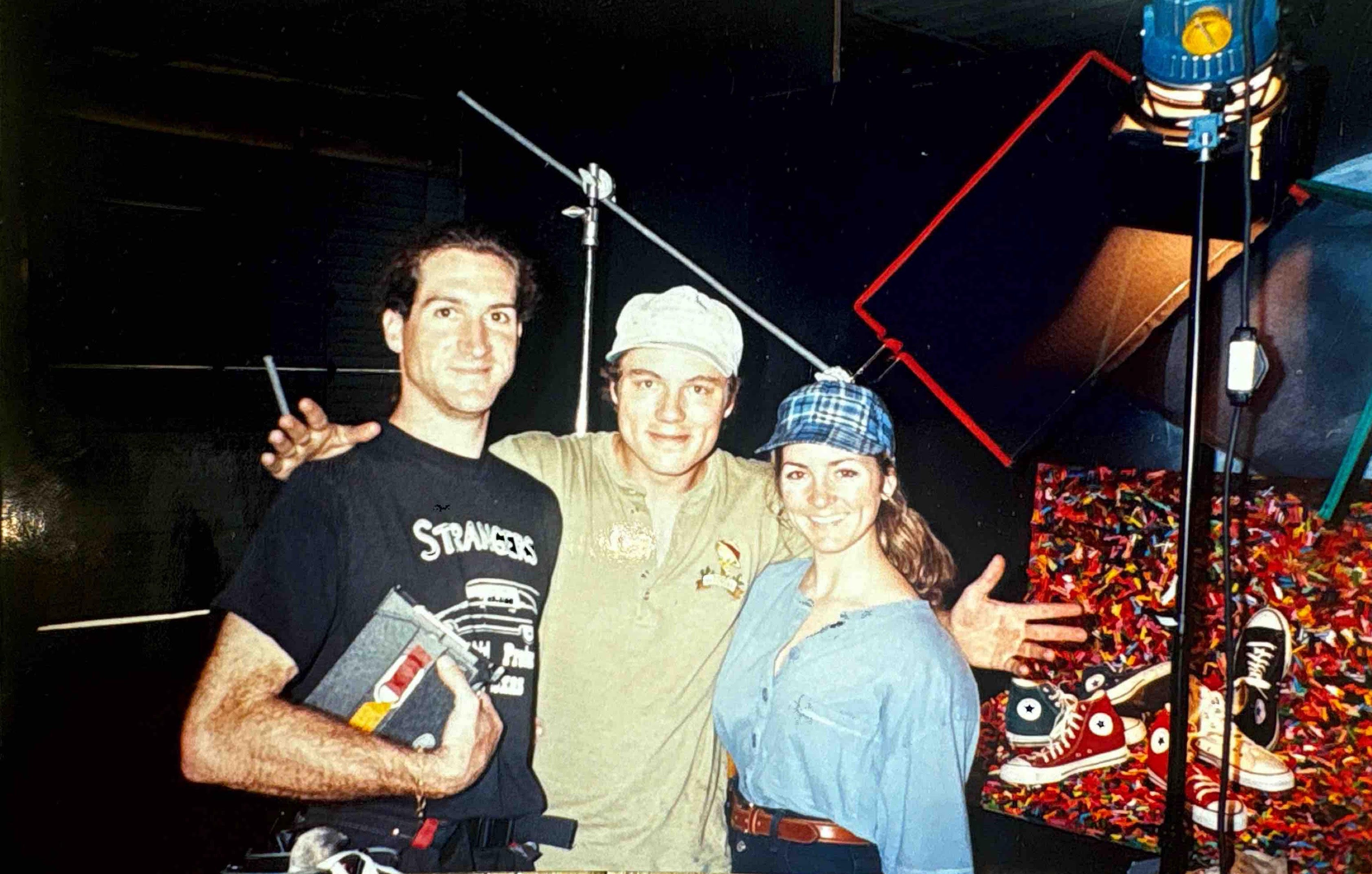
I worked as a PA on commercials, music videos, and a few motion pictures. Migrated into the art department — property master, set decorator, practical effects, and set construction. Started a company with my wife called Scenic Wonders. We built sets. We painted backdrops. I wanted to be a director, so I started shooting a demo reel.
I would have done it for free. I was doing it for love. And for a while — the best while — I was exactly where I was supposed to be.
Then life happened.
Our son was born premature. We weren’t properly insured. The medical debt was catastrophic. We lost nearly everything — the company, the warehouse, the momentum. We held on to our Apple computer.
I had already been using it for film work — 3D modeling, set design, and visualization. So when the work I loved became impossible to return to, I took what we had and pointed it toward something that would pay the bills.
Interactive multimedia. The dot-com boom. A small design boutique that got acquired. Then PricewaterhouseCoopers. Then IBM. Then my own software company, which we grew over fifteen years.
I was good at it. That’s the complicated part. I wasn’t failing at something I didn’t care about — I was succeeding at something I didn’t love. And there is a specific kind of pain in that. A friction that never goes away, no matter how good you get, no matter how much it pays.
The dream was always there. On the back of my eyelids, where it had always lived.
I got sober.
I won’t make it bigger than it is, but I won’t make it smaller either: getting sober changed everything. It cleared the glass. And what I saw — clearly, maybe for the first time in decades — was the shadow of a calling I had never fully answered.
I think some of the noise had something to do with the pain I was suppressing. The friction of not living in alignment with what I actually am. The shame of the detour. The dull ache of a dream deferred long enough to start feeling permanent.
When that cleared, something simpler remained: I love film. I have always loved film. I love it the way a man whose hair is on fire loves water.
And I’m 54 years old.
Here’s the truth: I don’t care anymore. Not in the defeated way — in the liberated way. I don’t care about looking foolish. I don’t care that half my friends will probably call this a midlife crisis. I don’t care about the odds. I don’t care that most people who want to do this never succeed.
That boy with the braces and the 8-track and the Star Wars figures is still in here. He never left. And I owe him. I owe him his dream.
So I’m writing a screenplay. A story I’ve been carrying around for years, turning it over and over, and I believe in it completely. It will take years to make. It will cost money I don’t yet have. It will require skills I’m still sharpening.
I’m going to do it anyway.
Return to Wonder is my journal of that journey — all of it, radically transparent. What I’m learning, what’s hard, what’s working, what isn’t. The craft, the industry, the honest account of one midlife filmmaker going all the way in on a dream he never actually abandoned.
If you're a filmmaker — aspiring or working — pull up a chair.
If you’re someone who put a calling on hold and wonders whether the window closed — I hope to prove it didn’t. That’s why I’m here.
I started making movies when I was seven years old.
I never really stopped.
I just forgot for a while that I was allowed to.